
CONTACT DERMATITIS
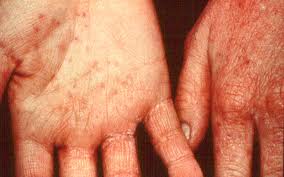
Contact dermatitis is caused by many irritants or agents that the human body comes into contact with. There are two methods that the irritant or agent can cause the skin to react. The first is by redness or inflammation of the skin and the second is by the skin having an allergic reaction to the irritating substance. Sometimes it is difficult for the person to identify the 'cause' as most of us have used many of the products for years. The most common places to look would be the use of finger nail polish remover, hand soaps and laundry soaps, or any other product that you have come into contact with such as irritant/ allergen.
Foot contact dermatitis is easier to determine the cause. Sometimes it is due to the very moist socks and shoes as some shoes do not allow the feet to breath or dry out. Also new socks with dyes or new shoes that slightly irritate the foot at some location can be the cause or a combination of these may be the cause. Try to change socks daily and alternate new shoes with old shoes on various days if possible. Antihistamines can be used and may be helpful to some people if the contact dermatitis is from various allergic substances such as pollen, cats, dogs, horses, mules, etc. A stronger treatment for contact dermatitis is corticosteroid. Corticosteroid come in many forms such as, cream, tablets and ointments. Corticosteroids will not cure the problem. Overuse, misuse and/or prolonged use of steroids can worsen the problem or create an even more difficult condition. Never use steroids on the face.Allergic contact eczema (dermatitis) is a red, itchy, weepy reaction where the skin has come into contact with a substance that the immune system recognizes as foreign, such as poison ivy or certain preservatives in creams and lotions. Many contact skin reactions are due to an immune system reaction. Try to build up your immune system with more sleep, better foods with more vegetables and water and reduce carbohydrates, sugars, soft drinks, alcohols, cigarettes, etc.
Toxicodendron dermatitis, also called Allergic phytodermatitis or Rhus dermatitis is an allergic contact dermatitis that occurs from exposure to members of the plant genus Toxicodendron. Usually the skin is involved; however, the eyes, airway, and lungs may be involved if exposed to smoke from burning plants. In susceptible individuals, lesions generally appear within 12-24 hours, although they have been noted to arise earlier. New lesions may continue to appear for up to 2-3 weeks.
Nickel Allergy Contact is a skin reaction to the use of nickel in costume jewelry. While nickel is not much anymore, a visible sign occurs with the green colored skin from the contact with nickel.
Hives or Urticaria is an irritation of the skin due to an allergic reaction or a short term or long term chaffing or abrasion of the skin or from an allergic reaction to pollen or grasses, etc. The skin reaction with a red rash or small red lesions that are elevated, or to red welts on the skin. Normally, the red hives will go away in a few days. Obviously try to locate the cause of the irritation and change the 'cause'. Those people that have a skin irritation or rash should examine what they are doing to themselves such as scratching or wearing rings, cosmetics, or wool or any clothes that are synethnic that irritates the skin. Most often it is changing 'what we are doing' is the cure as a medical product can not solves irritation due to friction or an allergy such as wool clothing as some of these may be your 'triggers' that set the hives into motion.
Angioedema is the swelling of the lower layer of the skin. It is very much like the hives on the upper layer of the skin but the lower layer of the dermis or subcutaneous skin tissue is affected. Most often, the areas around the eyes are swollen. Most severe are swollen areas of the nose and throat that can be an extreme allergic reaction as the patient can not breath very well.
Reaction to medications is a very common cause of hives or angioedema. Some common examples would be a reaction to aspirin or pain-killers with the reaction beginning to take place within 5 minutes to 60 minutes. Likewise, all people are different with food reactions as the reactions could range from peanuts to eggs and from milk to shellfish. The patients needs to be aware and not repeat the mistakes. Children can have hives from a viral infection such as the common cold or from exhaustion from physical exercise, or from clothing rubbing anywhere on their body. So the key is to 'look and examine' the past few hours and to try to find the food, physical abrasion, or the medical topical or oral medication taken within the last few minutes or the last several hours.
Sometimes it is difficult to find the 'trigger' that causes the contact dermatitis. Even if it is a legal drug or food reaction, it may take several days to be evacuated from our body completely.
CONTACT DERMATITIS OR COSMETICS DERMATITIS
Contact dermatitis is usually from items that we humans come in contact with such as wool clothing hair dyes, sunblocks, toothpaste, etc. So look around at the items much common with you that you use often. A most common type of cosmetic dermatitis is the use of old make-up and especially mascara for the eye lids. Most often the applicator of the mascara is 'dipped' or inserted back into the bottle which contaminates the entire bottle. Don't feel bad as it happens to every woman. Just simply purchase a new bottle of mascara every month or so or as soon as you are begin to see inflamed eye lashes. Please review all of our cosmetics and try to use the minimum.
Contact Dermatitis-Rubber A dermatitis rash can be formed from products that contain rubber, mainly latex. Items to be avoided include most hair nets, hair ties, hair clips, condoms, rubber gloves and so on. There are many products on the market that contain rubber. Look for products which state they are hypoallergenic, meaning not likely to cause an allergic reaction.
Contact Dermatitis to Soaps and Detergents Dishwashers, housewives, laundresses and surgeons, often show dehydration or shriveling of the keratin layers, which leads to irritation (primary irritant type dermatitis). Coconut-oil-containing soap is often the worst culprit. Neutral soaps, such as Cetaphil, Lowila, Basis, Oilatum, or Dove are much less drying. Many of the stronger antibacterial soaps, such as Dial, Zest, Lifebuoy, Safeguard and Palmolive Gold, are sensitizing as well as drying, and may be photosensitizing.>
Sometimes the cleaning detergent that clothes are washed in causes a dermatitis skin reaction. As soon as a skin rash is noticed, try to think back of what wash detergent was used and if there is a 'link' between. There one really good laundry detergent named Dreft.
Contact Dermatitis to Deodorants and AntiperspirantsThese products often contain neomycin, zirconium, formaldehyde and antibacterial agents, such as hexa chlorophene, which can sensitize, as well as aluminum salts. Deodorant soaps containing salicylanilide derivatives or hexachlorophene analogs can photosensitize. (Examples include Lifebuoy, Dial, Safeguard, Zest, Irish Spring, Coast or Palmolive Gold).
Sometimes after dry cleaning clothes, there could be a very small (less than 1/10 of 1%) residue from the cleaning agent that could be suspectful if you found no other condition that can be avoided. Just let the suit or dress evaporate out of the clothing for several days.
Contact Dermatitis in Footwear occurs most often from the use of rubber boots or rubber toes shoes with much insulation. Also another cause is the use of dyes and adhesives used in manufacturing the shoes. Try to change socks daily and to alternate shoes when wearing new shoes if possible. Another cause can be the waterproofing to keep the feet dry when the shoe is in excessive wet outside weather or snow. The irritant is most often silicone spary which penetrates the leather keeping the water out, but a small amount can irritate the skin. Avoid bleaches and strong detergents in washing the socks as sometimes the residue after washing can cause irritation.
If excessive sweating occurs in your shoes, you may try to control by the use of Zeasorb Powder, or and a variety of Dr. Scholl's foot products such as the granules, or you may change shoe inserts very often.
Diaper dermatitis, better known as diaper rash, is a sore, red rash that appears on skin that is covered by a diaper. A type of irritant contact dermatitis, diaper rashes are usually caused by prolonged contact with moisture. In addition, the bacteria found in bowel movements react with chemicals in urine and creates a build up of ammonia and other chemicals that irritate the skin. There is no apparent link between diaper rash and cloth or disposable diapers.
The best treatment for diaper rash is to keep the area as clean and dry as possible. This requires frequent diaper changes. Gently cleanse the skin after a bowel movement with a mild soap, rinse with warm water, and then dry the skin completely. If the skin is cracked, you can apply a barrier cream to protect the skin from moisture. It’s recommended that you let the child’s skin get as much air as possible. You can do this by letting the child nap without a diaper, placing a waterproof pad or open diaper under his or her bottom to protect the bed from urine or bowel movements while the child is sleeping. If you use cloth diapers, avoid plastic pants, which do not allow airflow. It’s a good idea to use disposable diapers at night because they pull the moisture away from the child’s skin. With treatment, diaper rashes should begin to heal within three days. Because a baby has a large ratio of skin to body weight, it is best to avoid steroid creams, which are absorbed into the bloodstream through the skin. Only use a steroid cream if recommended by your doctor for severe cases of diaper rash. A yeast infection is treated with a special antifungal cream.
You can prevent diaper rash by changing diapers frequently so the skin stays dry. Applying a light layer of cornstarch may help to prevent diaper rash. Talcum powder should not be used because it can be inhaled and cause respiratory infections. If you wash your own cloth diapers, be sure to use bleach to sterilize the diapers. Contact your doctor if a diaper rash does not improve with treatment after several days.
Contact dermatitis can be found on any location of the body and from almost any cause. Even if you think you would 'not be allergic' to something, when the skin is weak from excessive washing and the body immune system is low, the skin can react from seemingly anything. Yet most often the contact dermatitis reactions occur on areas of the body that comes into contact with the agent or irritant. Very few types of contact dermatitis is contagious with poison ivy being one of the few.
The very best prevent is to try to avoid items that you know will irritate your skin or likely to irritate most people's skin such as poison ivy, petroleum lubricants, gasoline, Monsanto Roundup,et. And if you must use these or be around poison ivy, then wear gloves. Throw away the gloves after use. And wash your hands or the contact areas of your body as soon as possible. Likewise, wear protective clothing and eyewear to prevent allergic contact dermatitis.
Clothing should be loose fitting and 100% cotton. New clothing should be washed in dye-free, unscented detergent before being worn.
Irritant contact dermatitis can be painful due to the skin damage from sunburn, convection burn, gasoline irritation from filling your car, etc. Even surgeons that wash their hands often can have irritant contact dermatitis. So many other professionals such as mechanics, farmers, construction workers, etc. are all likely to have irritation with the contact or frequent washing of the hands. Often some type of dermatitis may appear such as atopic dermatitis.