
ERYTHRODERMIC PSORIASIS
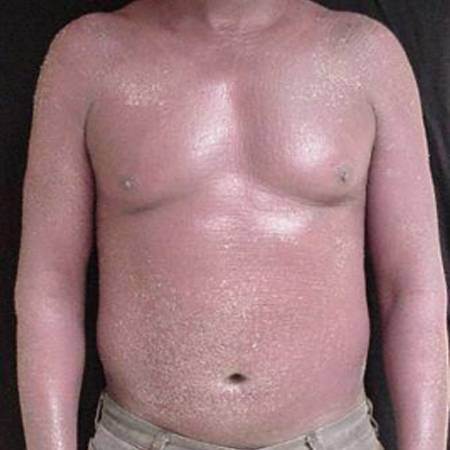
Red Skin Psoriasis (Erythrodermic psoriasis) as viewed by an experienced dermatologist as very large areas of skin that is red with inflammation. Body fever and chills may result from the inflammation along with swelling. The extreme inflammation is caused by the the patients body immune system being lowered as a result of metabolic acidosis which is the cause or ethnology. Red skin psoriasis or erythrodermic psoriasis can be a severe illness due to such a large skin area becoming inflamed.
Erythrodermic psoriasis is a rare condition in which the rash is spread over large sections of the body. The skin is very inflamed which affects its ability to function properly. It does not retain fluid as normal, which results in the patient feeling constantly thirsty and being dehydrated. It also impairs the skin's performance in maintaining body temperature control so the patient may lose heat more easily and be more susceptible to hypothermia. This is also a more serious form of the condition and one that needs expert medical management.
Red Skin Psoriasis or Erythrodermic psoriasis is most often seen with plaque psoriasis that has grown out of control and more skin becoming redder and more inflamed with resulting high temperatures. However, in some cases erythrodermic psoriasis is the first manifestation of psoriasis, even in children.
Steroids suppress the immune system:
Taping off your use of steroids is the best course of action. Sudden stop of steroids can flare the onset of Erythrodermic psoriasis. To rebuild the natural immune system, introduce more water, vegetables, fruits and mild exercise.