
VARICOSE ECZEMA
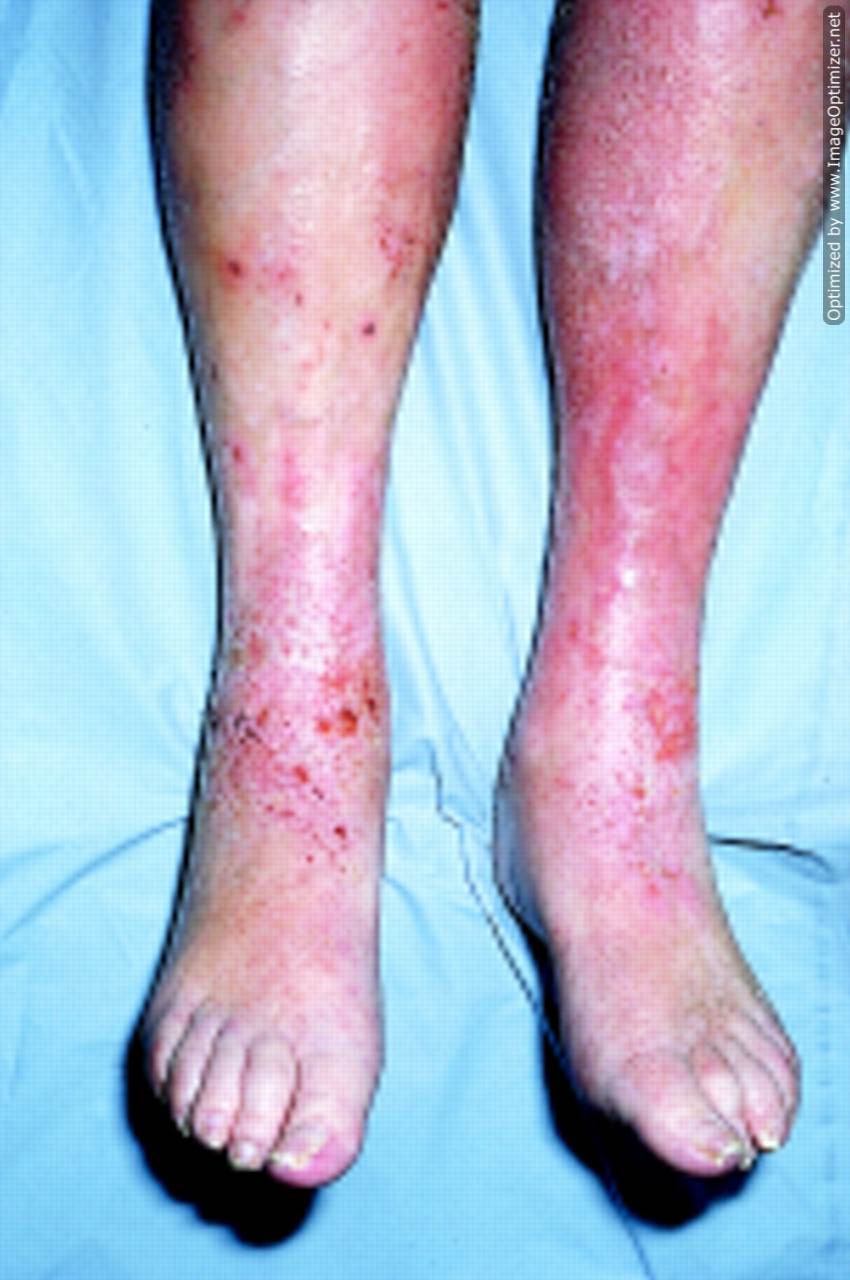
Varicose eczema or stasis dermatitis or stasis eczema is more common in those adults in their 50' to 70's and is primarily a blood circulatory problem. Trying to improve the circulation of blood is the best, least expensive treatment by having fun with more golfing, swimming, walking in the parks or malls or visiting friends.
The areas most affected are the lower legs and ankles which become swollen and red speckled inflamed and itchy. Moisturizers such as Safflower oil can be most useful and economical. Try to improvement for more blood circulation to prevent ulcers.
A common problem that is associated with varicose ulcers is contact allergic eczema caused by medications applied to the skin such as steroids, topical antibiotics, lanolin and also preservatives in various preparations. If this is suspected, skin patch testing may help to identify the problematic substance.
Varicose eczema is associated with varicose veins.
Varicose eczema causes the skin around the ankles and shins to become discolored (red or brown), thick and itchy, fluid accumulates in the tissues just beneath your skin creating a swollen appearance. Varicose veins and other chronic conditions in your legs can cause a buildup of fluid. The swelling known as 'edema' occurs when blood plasma leaks through the tiny capillaries and through the skin. The lack of a good blood supply to the previously healthy tissue causes more cell death and the beginning of more waste or dead skin cells. The key is improving blood circulation. When walking the leg muscles pump blood upwards and valves in the veins prevent pooling. A clot in the deep leg veins (deep venous thrombosis or DVT) or varicose veins may damage the valves. As a result back pressure may develop and cause fluid to collect in the tissues. The affected leg is usually swollen, particularly after prolonged standing and during hot weather. Eczema can arise as discrete patches or affect the total lower leg. The affected skin is red and scaly, and may ooze, crust and crack. It is frequently itchy. Start with a good healthy diet and more recreation exercise with friends and family.
A secondary condition common problem that is associated with varicose ulcers is contact allergic eczema caused by medications applied to the skin such as steroids, topical antibiotics, lanolin and also preservatives in various preparations. If this is suspected, skin patch testing may help to identify the problematic substance.