
STASIS DERMATITIS
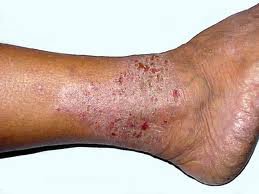
Stasis dermatitis symptoms are of skin degeneration due to failure to have new skin regeneration. The skin is viewed by the patient as dying skin and often with a combination of scales and possibly of ulcers where the skin has actually died and does not have sufficient skin to cover the muscle tissue. Stasis is very much related to poor blood circulation to the muscle and skin tissue. Some cases of stasis dermatitis can have a fungus growth to possibly become infected at a later time.
This type of dermatitis will occur in the varicose veins. Stasis dermatitis may and can cause the surrounding skin of the shin on down to become red or brown in color and feel thick and itchy. The cause of stasis dermatitis is due to the plasma fluid leakage into the tissue from the blood vessels. The result is to much fluid accumulation that interferes with new cell production and the tissue reduced capacity to dispose of waste products. From this symptoms, the term 'stasis dermatitis' was made as it means 'standing still' or 'fixed or stationary'. As the blood flow is slow or stationary in the lower legs, the problem of stasis dermatitis most often occurs in the ankles.
Stasis dermatitis can have symptoms of a red, dry itchy rash on the lower legs and ankles. Sometimes stasis dermatitis symptoms can include scaly skin and the weeping exuding of body serous fluid. Also stasis dermatitis of brown legs or fungal growth may appear. As stasis dermatitis worsens, open ulcers can began to form due to the skin breakdown and inability to regenerate itself therefore the epidermis is much thinner.
Stasis dermatitis is found mostly in patients that are normally in their 50's and have circulatory blood problem with insufficient flow to the muscle and skin cells resulting in skin that not capable to new cell production. The weak circulatory system and lack of new cell growth results in:
- Larger protruding veins that are quite visible to the patient and to other. Th most common name is Varicose veins.
- Sometimes the patient may have blood clots in the veins in the lower portion of the body.
- Many heart problems can appear ranging from congestive heart failure to various other blood circulatory problems.
- The kidneys sometimes begin not to function properly with varies degrees of failure.
- Long term swelling of the legs.
The rash is often made worse by the use of salves or ointments. It may be aggravated by infection with bacteria or fungus.
Sometimes the elevation of the lower feet and ankles while laying down so that the return blood can reach the heart for more efficient re-circulation can possibly help. Also some may wear compress or support hose. However, unless circulation improves, these approaches will be relatively ineffective. Stasis dermatitis can be treated by Dermatitis-Ltd III. as a great option for individuals whose skin is sensitive and in need to new cell growth.
If cellulitis begins due to a large red infection that is swelling and spreading, oral antibiotics will be needed immediately by your personal doctor. Also if the swelling and redness from the cellulitis infection does not reduce very quickly, emergency hospital care will be needed to prevent an amputation.
The symptoms of stasis dermatitis are very similar to the many types of dermatitis. Long lasting significant redness and irritation may be observed with some scales or plague and with possible weeping of body fluid if the area has been scratched or irritated. There is a possibility of infection from the scratching or if the wound is exposed to bacteria. Sometimes pustules (with pus) can be observed that may go away very quickly. Some papules (elevated red lesions or bumps) may be observed but finally disappear to have others come in their place. Likewise, resulting hyperpigmentation or color change of the skin may take place from the long lasting stasis dermatitis.
Stasis dermatitis should clear up with effective treatment. However, the discolored skin rarely returns to its normal color.