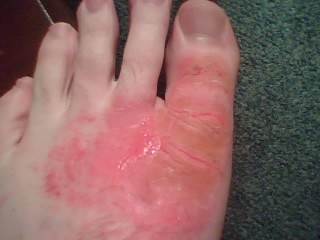
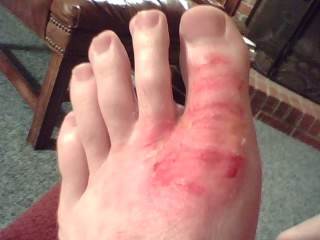
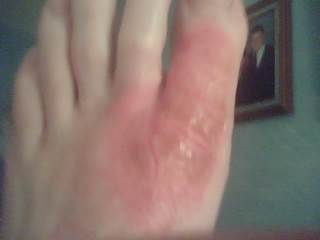
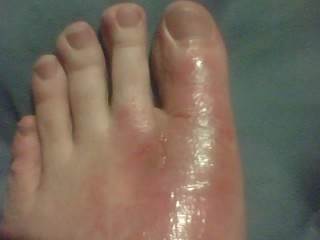
PLAQUE PSORIASIS
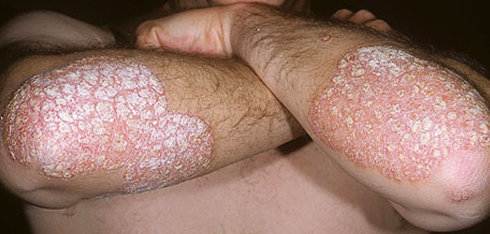
Plaque psoriasis is diagnosed more than any diagnoses of psoriasis. One reason for plaque psoriasis being diagnosed most often is that it can be found on any location of the body. The areas having the most abrasion, bruises or scratches to irritate the skin are the elbows, knees, frontal abdomen area, or any other areas that can have the skin traumatized from a skin injury to start the plaque psoriasis. The symptoms of plaque psoriasis are layers of dead skin cells from the injury and sometimes appears as scales or layering of dead skin cells peeling off. So you will understand that plague psoriasis is 'very common' therefore, it gets the medical diagnoses of 'psoriasis vulgaris' or 'common'.
To treat Plaque Psoriasis we recommend using Psoriasis-Ltd III, you have nothing to lose but your psoriasis. Psoriasis-Ltd has 120 day 100% refund, no questions asked.
The areas of plaque psoriasis can be small or large skin surfaces and can be long lasting and of course red itchy patches even if the patient tries to remove the scaly or dead skin layers. Please do not remove these areas as manipulation by any means such as scratching only irritates or inflames the skin even more.
The location on the body of the plaque psoriasis can dictate the 'looks' or 'viewpoint of the symptoms as the skin is different at various locations. Your foot soles and hand palms have a very different texture than that of your knees as the skin is much thicker and could have small scaling or layer peeling. Conversely, if the plaque psoriasis is in more private moist areas such as the groin, below the breast, the buttock crack or armpits, the symptoms may present without scaling but just a red rash appearance with the borders defined by the abrasion or friction of the skin rubbing together.
Plaque psoriasis affects over 90% of patients. Plaque psoriasis can be found on the following locations: lower back, elbows, scalp, arms, knees, shoulders and legs. It is very much an adult condition and is seldom seen in children.
Frequent plaque psoriasis may not always be itchy, or it may not be uncomfortable condition. But, the appearance, and the shedding of the white scaly skin, can cause many patients a lot of emotional discomfort.
Each psoriatic patch looks like a series of little disks or plaque that have super-imposed themselves on to the body. This plaque-like shape is peculiar to this form of the condition and is what gives it its name. The plaque are often round or oval in shape or they may not have a distinct shape, but they almost always stand out from the surrounding area of the body. The difference between the normal skin and the area affected by psoriasis is that the area of skin will have a white scaley to flaky appearance to it. Each lesion patch usaully start out very small and then will grow larger in size within a period of days or weeks. Sometimes these patches can grow so rapidly, that they can join with each other to become one large lesion. In a typical flare up, the condition can spread quite quickly over a few days or weeks and then stabilize before gradually disappearing. The psoriatic patches become less red and scaly until they reduce in size or disappear completely.
The patches are red and rough to the touch and the affected skin incredibly scaly. Scaliness can be kept to a minimum by regularly moisturizing the skin with the relevant creams and ointments. It is important to keep the skin moisturized even when the psoriatic patches seem to have cleared. Often the skin underneath has not yet healed and, if it isn't treated properly, the scaliness may return quite quickly.
Symptoms of plaque psoriasis:
Look on the knees and elbows for red scaly plaque.
- Small plaque on the knuckles
- Characteristic plaque located behind the ears or in the ears
- Plaque psoriasis can be anywhere on the body
- Pits or discoloring of the nails
| ||||