
Baby Eczema or Infantile Seborrheic Eczema or Cradle Cap Eczema
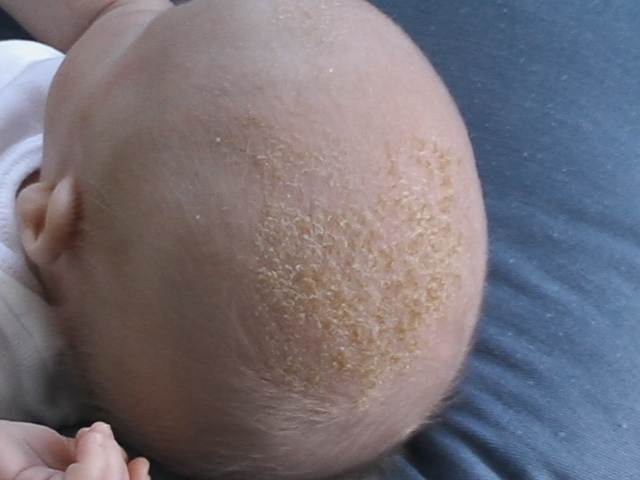
Infantile seborrheic eczema is a common condition affecting young babies and is also referred to as 'cradle cap'. Most often the beginning of infantile seborrheic eczema is seen on the scalp but also in the skin and also is found in the diaper area. Cradle cap is a crusting and scaling rash found on the scalps of many healthy babies which can be improved quickly and gently with Eczema-Ltd III.
Cradle cap is the normal buildup of sticky skin oils, scales, and dead skin cells. The sebaceous glands in a baby's skin may be hyper-activated because of Mother's hormones that crossed the placenta just before birth. These glands secretes an oil that keeps the old skin cells attached as it dries. As new skin cells are produced, many of the old skin cells still remain attached and do not disengage. The resulting thin dead skin layer can be removed with a gentle shampoo and washing with a wash cloth. If the skin area appears dry, you may use Safflower oil from the grocery store and gently massage the area with your finger tips.
Similar seborrheic scales may also occur on the eyelids, ears, around the nose, and in the groin. Cradle cap may occur in newborns and small children up to toddlers, and is a harmless, temporary condition caused by decreased function of a particular enzyme, resulting in a skin disorder similar to dandruff in adults. Cradle cap is really simply an 'appearance skin problem' and rarely itches and rarely causes discomfort. Only if the area is scratched enough by the parents in trying to remove it that an infection occurs that you would need medical assistance for antibiotics.
Medical intervention is generally not required and basic home treatment will remedy Cradle Cap in Infants. You may use a damp wash cloth to moisten, massage and remove excessive scales. Do not 'force' them off as to prevent an open would that would bleed or weep clear sebum fluid. Shampooing your babies hair once per day with a very gentle shampoo will help to reduce scales. After about a week, most of the scales may not be present, then switch to one shampoo per week. Brush your child's hair daily with a very soft brush. After this period and you still see scales, then use Jojoba Oil (found in most health stores) or Safflower Oil (found in most grocery stores at 1/10 the cost) and apply about two drop in the palms of your hand and 'smear your hands together to spread the oil evenly over the two hands and gently message your babies scalp which will help loosen more scales and help the skin to heal.