
DYSHIDROTIC ECZEMA
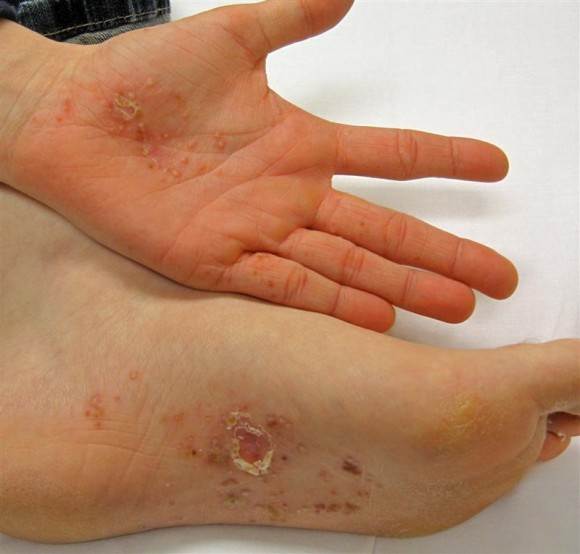
Dyshidrotic eczema appears as intensely itchy blisters on the hands, fingers and soles of the feet. When it affects the hands it’s called cheiropompholyx and pedopompholyx when it affects the feet. It is also known as pompholyx, keratolysis exfoliativa, or vesicular eczema of the hands and/or feet.
The term pompholyx (Greek "bubble") is generally reserved for the cases of deep-seated itching blisters. Generally associated with, but not caused by, excessive sweating (hyperhydrosis).
The cause of this pattern of eczema is not fully understood but in some cases there is a history of allergic contact dermatitis especially to nickel. Very often no specific allergen is found despite extensive patch testing. This form of eczema is aggravated by stress. Oral antihistamines help to alleviate the intense itch. Frequently applied calamine lotion helps to cool the affected skin. For the best treatment for dyshidrotic eczema we recommend using Eczema-Ltd III
The condition is characterized by the sudden onset (1-3 days) of deep-seated, clear blisters. In the later stages, scaling, thickening, and painful fissuring typically occur. Secondary bacterial infection is very often a complication with dyshidrotic eczema. In many patients, the condition worsens during the summer months.
Hand eczema occurs most frequently in persons who frequently have their hands immersed in water, such as food preparers, nurses, or florists. The warm, moist conditions in shoes provide an ideal situation in which foot dermatitis may also flourish. These eruptions often become chronic and can be severe. Chronic hand-and-foot eczema is similar to other forms of dermatitis in appearance.
Dyshidrotic dermatitis (pompholyx) is a form of hand eczema more common in women which starts on the sides of the fingers as itchy little bumps and then develops into a rash. The condition can also affect only the feet. Some patients have involvement of both the hands and feet.
Hand eczema is the general term used to describe a variety of skin irritations that your hands can develop. You may have itchy, scaly patches of skin that flake constantly. Or your hands may become red, cracked and painful. In some cases, the rash worsens into weepy bumps. These problems can happen to anyone at any time of life, but they are more likely:
- If you had similar skin problems, hay fever or other allergies as a child. (Doctors call this set of symptoms "atopy.")
- If your hands get wet a lot, whether at home, work or play.
- If your job exposes your hands to irritating chemicals.
Dishpan hands are actually a form of hand eczema. It occurs because constant wetting and drying breaks down the skin's protective outer barrier. If you already have hand eczema or are recovering from an episode, you need to avoid getting water on your hands so often. Perfumes and preservatives in soaps and irritants in household cleansers can make things worse.
Unfortunately, there is no quick and easy solution to hand eczema. Clearing up an episode of the condition can take several months, and you'll need to continue babying your hands for as long as a year even though they appear eczema-free.
The exact cause is not known. Dyshidrotic eczema often appears during times of stress. People who have dyshidrotic eczema are genetically predisposed to it. Some consider it is caused by abnormal sweating. The condition may be mild with only a little peeling, or very severe with big blisters and cracks which prevent work. The first (acute) stage shows tiny blisters (vesicles) deep in the skin, associated with itching and a burning feeling. The later and more chronic stage shows more peeling, cracking, or crusting. Some patients will have mostly one stage, and some patients will have mostly the other. Some times both stages occur at the same time. Secondary infection with staphylococcal bacteria is not infrequent. The result is pain, redness, swelling and crusting or pustules.
As in other forms of hand eczema, pompholyx is aggravated by contact with irritants such as soapy water, detergents and solvents. Contact with them must be avoided as much as possible and protective gloves worn. Some people with pompholyx are found to be allergic to nickel, a common metal. Nickel allergy can be detected by patch testing. These patients must try not to touch nickel items.
Pompholyx often runs a chronic course, but may go away for long periods. It often reappears after a period of nervous tension, worry or stress. Unfortunately pompholyx does not have any quick sure cure.
Possible triggers:
- Deodorant soaps and strong detergents.
- extremely stressful situations.
- Rubber or latex gloves next to the skin. If you must wear gloves, be sure to wear a cotton liner under them.
Clearing up your hand eczema depends largely on how you change your day-to-day habits. These changes may be difficult, and that's why we've gathered together this collection of tips for living with hand eczema to make the process easier for you:
- After using the toilet, wash your hands with lukewarm water and a perfume-free cleanser such as Cetaphil® ‘Moisturizing Gentle Cleansing Bar for Dry Sensitive Skin”.
- Sometimes oral antihistamine pills (Benadryl) can help relieve the itching.
- When you do wash your hands, blot them dry gently and immediately apply a moisturizer. Jojoba oil (100% natural) is very good to use.
- Avoid the waterless or antibacterial cleansers on the market; they contain alcohol, solvents and other ingredients that may make your problem worse.
- Keep several pairs of cotton gloves around the house to protect your hands while doing dry chores. Even folding laundry can irritate tender skin. Wash the gloves if they get dirty. If your fingertips aren't affected by hand eczema, cut the glove tips off to stay cooler in hot weather. For wet work, put on your cotton gloves and then cover them with unlined, powder-free vinyl or neoprene gloves. (Latex in rubber gloves can cause allergies.) Afterward, wash reusable gloves inside and out and let them air dry thoroughly. Toss the cotton gloves in the washer.
- Wear gloves when peeling potatoes and when working with meat, onions, peppers or acidic fruit, like citrus and tomatoes. We recommend disposable vinyl gloves. When you finish preparing these foods, just throw the gloves away. If a reusable vinyl glove gets a hole, throw it away. Wearing a glove with a hole in it is worse than wearing no glove at all. If water gets in your glove, take it off immediately.
- It's best to never wear a waterproof glove more than 15 or 20 minutes at a time. If you must wear your waterproof gloves for longer than that, apply a moisturizer to your hands beforehand.
- Ask someone else to shampoo your hair for you. Or wash your hair wearing your waterproof/cotton liner glove combination. Use rubber bands on your forearms to keep water out.
- Rings can trap irritants underneath them. Remove them when doing housework and before washing and drying your hands. Also, clean your rings regularly by soaking them overnight in 1 tablespoon of ammonia in a pint of water. Rinse and dry the rings before wearing.
- Use the washing machine and the dishwasher, not your hands, to do laundry and dishes. If you must wash dishes by hand, do it under running water. Use a long-handled scrubber to minimize hand damage from hot water.
- For outdoor work, wear unlined leather or thick fabric gloves to protect your hands. Leather gloves also will protect your hands in dry, windy or cool weather. Avoid wool because it may be prickly and irritating.