
Guttate Psoriasis
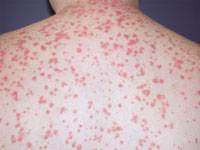
Guttate psoriasis symptoms are of small tear shaped or nearly round red nodule that looks somewhat similar to chicken pox. Guttate comes from the Latin term 'gutta' which means 'drop'. The guttate psoriasis is relatively uncommon affecting fewer than 2% of those with psoriasis. Guttate psoriasis is more common in children and adults younger than 30 years. Boys and girls are equally affected. An outbreak of guttate psoriasis may be an immune reaction that is triggered by a previous streptococcal infection or some other type of infection. Guttate psoriasis is also known as 'Eruptive Psoriasis' and is considered the least severe form of psoriasis. The treatment of guttate psoriasis is easy to solve.
After bacterial or viral infections when the body has a weaker immunity, guttate psoriasis is more likely to appear on the patient's back, chest, abdomen, arms or legs. Some patient may possibly have scales. Also guttate psoriasis is likely to appear as the immune system is lower due to a large amount of physical work, stress or trauma as well as a response to stress from psychological reasons. Also guttate psoriasis can appear as a response to the use of malaria medications. Guttate psoriasis is many small patches of psoriasis, all over the body, and often happens after a throat infection. Psoriasis-Ltd III can help reduce those red blotchy spot
The facial lesions of guttate psoriasis should not be confused with the papules of rosacea. Rosacea is an inflammation of the skin which will result in redness of the skin, face may appear to be swollen, and papules which resemble red acne(pimples) without any pus