PALM & FOOT PSORIASIS
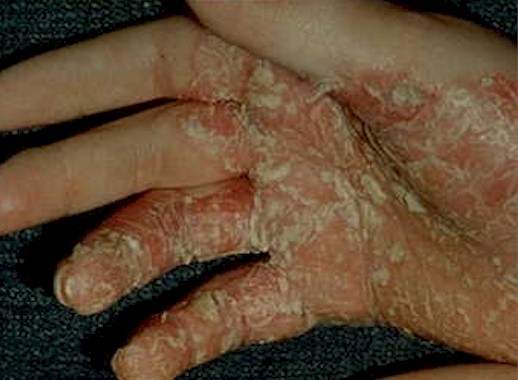
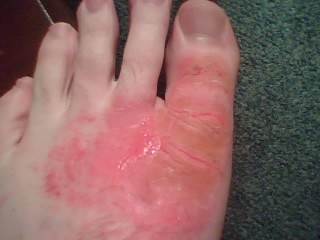
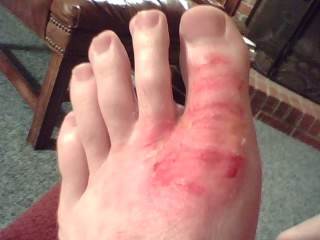
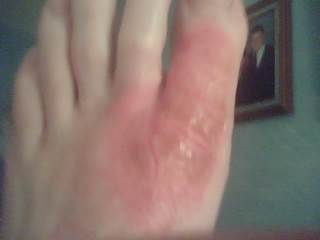
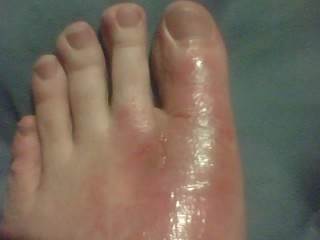
Palmoplantar psoriasis is a severe cracking, peeling with pus filled blisters on the skin. The area of the body that can be affected by this is usaully the hands (mainly the palms) and the feet (usaully on the soles of the feet). The finger nails and toe nails are affect as well. More often than not the cracking and peeling will get so bad these areas will start to bleed, causing the patient to miss work or school and worry about infection setting in. The patient's skin color may look to have a copper hue the skin. This condiction does go by another name: "palmoplantar pustulosis".
Red, scaling plaques with small pustules that develop on the palms and the soles of the feet are called palmoplantar psoriasis. The pustules are 1/32 – 1/2 inch (pin-head to dime-sized) in diameter and are often painful, interfering with daily functioning. It predominately affects women.
Palmoplantar psoriasis looks very different from common plaque psoriasis and flexural psoriasis, and usually only appears on the soles of the feet and palms of the hands. Instead of inflamed and scaly patches, there are weeping, cracked lesions that can look like masses of tiny yellow blisters. These can be quite painful and look infected, even though there is no infection present. Over a period of days, the pustules turn a brownish color and fall off, often only to be quickly replaced. The production of new pustules to replace the ones that have been shed can go on over a period of years.
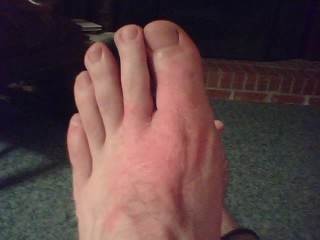
Palmoplantar psoriasis can affect the feet causing thick scaling and redness. The feet can occasionally be the only area to be affected by psoriasis with no rash elsewhere on the body. When psoriasis is found elsewhere on the body, the feet can also be the area involved with thick scaling, redness and sometimes pustules. The pustules are known as sterile pustules as they do not have infection within them. Our research shows that Psoriasis-Ltd III gives the best results for this type of psoriasis.
| ||||